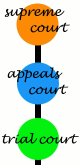
A superior court is a state court that has "original jurisdiction." A simpler way to say this is that superior court in most states is where legal actions enter into the state judicial system. The superior court is a trial court.
For some odd reason, New York calls its superior court the Supreme Court; Another way to say this is the New York supreme court is the court of original jurisdiction.
If either of the litigants does not like the decision of the trial
court (the supreme court in New York) then that litigant has several options. If she wants, she can file
an appeal with the state appellate court which may or may not take the
case. Most of the opinions you read in law school come form appellate court
decisions.
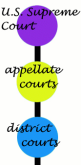
If a plaintiff has a federal cause of action, then she should file her case in federal district court. District courts are like state superior courts in that the federal district court is usually the point of first contact for plaintiffs with a civil cause of action.
If your case falls within the jurisdiction of the federal court system you may be able to choose which forum, federal or state, within which to bring your suit. For a more detailed discussion on the federal court system, see the procedure section of the disc. The federal court system mirrors the states'. The court of original jurisdiction is called the district court, the appellate court is called, aptly enough, the court of appeals; and the ultimate court is called the United States Supreme Court.